
Bone Grafting for Dental Implants
Building a Strong Foundation for Long-Term Implant Success
Dental implants need solid bone to stay secure — but if you’ve lost bone over time due to tooth loss, gum disease, or other factors, you may need bone grafting to create the support those implants require. At Aaron B. Carner, DMD, LLC, we provide bone grafting for dental implants in a calm, straightforward setting where you’ll always know what to expect.

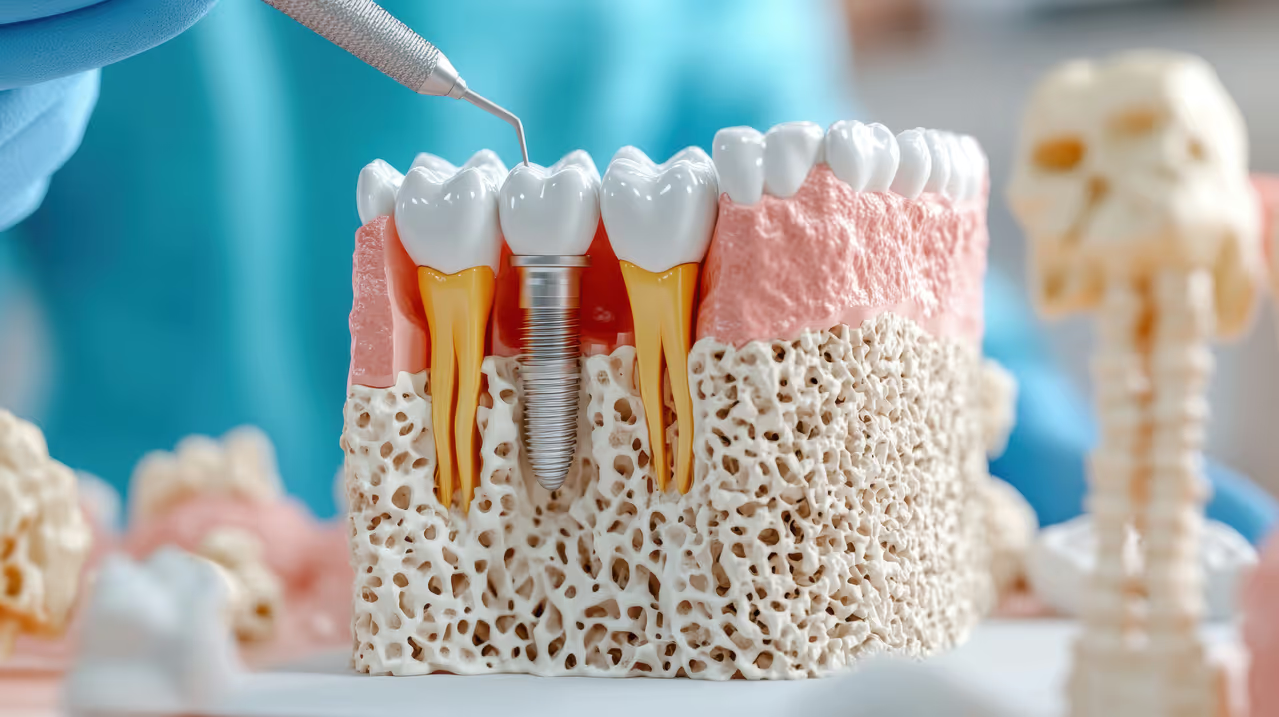
Expanding Implant Options Through Restorative Bone Support
This procedure allows more patients to qualify for dental implants by restoring lost jawbone volume and creating a healthy foundation for long-lasting results. Whether you’re from Greenwood, Clinton, Coronaca, Cross Hill, or Mountville, we’ll help lay the groundwork for a secure, confident smile.
"I Was Told I Don't Have Enough Bone for an Implant"
This is the most common reason patients are referred to us for bone grafting, and it is usually not the end of the conversation. A jaw that cannot support an implant today can often support one after grafting.
Bone loss happens for predictable reasons. A tooth that has been missing for years leaves bone with nothing to stimulate it, so it gradually shrinks. Gum disease destroys bone around the teeth it affects. An extraction site can collapse if nothing is done to preserve it.
If you have been told elsewhere that you are not a candidate for implants, it is worth having your jaw evaluated by a periodontist. Dr. Aaron B. Carner is board certified by the American Board of Periodontology, and the gums and jawbone that implants depend on are the focus of that training. He uses 3D imaging to measure what bone you have and determine what, if anything, needs to be rebuilt first.
Grafting and implant placement are both performed here, from the first evaluation through follow-up. You can read more about dental implants at our practice or what affects implant cost.
What Is Bone Grafting for Implants?
Bone grafting for implants involves placing bone material in areas where the jaw has thinned or deteriorated. This graft helps stimulate new bone growth and improves the volume and density of the jaw so that it can properly support an implant post.
The grafting material can come from a few different sources:
- Autograft – from your own body (typically another part of your jaw)
- Allograft – from a donor source that has been processed for safety
- Synthetic graft – biocompatible material designed to stimulate bone growth
Once placed, the graft integrates with your natural bone over the following months, creating a stable foundation where an implant can be safely anchored. If your bone loss is the result of gum disease rather than a missing tooth, our bone grafting for gum disease and tooth loss page covers socket preservation, ridge augmentation, and periodontal grafting.
When Is It Necessary?
Not everyone needs bone grafting before getting dental implants, but you may be a candidate if:
- You’ve been missing teeth for a long time and the jawbone has shrunk
- Your bone has been weakened by gum disease or infection
- You’re preparing for implants in the upper back jaw (often requiring a sinus lift)
- A previous extraction site has collapsed or lost height
Dr. Aaron B. Carner uses 3D imaging and a detailed exam to determine if bone grafting is needed as part of your implant plan.
Sinus Lift for Upper Back Implants
Replacing molars in the upper jaw presents a specific challenge. The sinus cavity sits directly above those teeth, and once an upper molar is lost, there is often not enough height between the jaw and the sinus to anchor an implant.
A sinus lift addresses this. The sinus membrane is gently raised and bone graft material is placed beneath it, building the height an implant needs. It is a routine part of implant treatment in the upper back jaw and is performed in our office.
Whether you need one is determined by 3D imaging during your implant evaluation, not guessed at in advance.
What to Expect from the Procedure
The process is handled in-office with local anesthesia, and sedation is available if needed. The graft is carefully placed into the treatment area and secured, then allowed to heal and integrate over several months. In many cases, a dental implant can be placed at the same time as the graft — but if more healing time is needed, we’ll wait until the area is fully ready.
We’ll walk you through every step and provide clear aftercare instructions to support your healing.
Frequently Asked Questions
Question text goes here
Answer text goes here
How long does the graft take to heal?
Healing time depends on the size of the graft and your overall health. Most grafts take 4 to 6 months to fully integrate, though some minor grafts may be ready for implant placement sooner.
Is bone grafting painful?
We numb the area during the procedure, and most patients feel only mild soreness afterward — similar to a typical dental extraction. You’ll be given detailed care instructions and pain relief options as needed.
Can a graft fail?
Complications are rare, especially when post-op instructions are followed. We’ll monitor your healing closely with follow-up visits to ensure the graft is integrating properly.
Will this delay my implant placement?
In some cases, yes — we may need to allow the area to heal fully before moving forward. But this step is key to ensuring the implant has a strong, long-term foundation, so it’s well worth the extra time.
Is bone grafting covered by insurance?
Depending on your plan and the reason for the graft, part of the cost may be covered. Our team can help verify your benefits, and we offer flexible payment plans through CareCredit and Cherry.
Payment options through Cherry Technologies, Inc. are issued by its financing partners.
Lay the Groundwork for a Long-Lasting Smile
If you’ve been told you don’t have enough bone for a dental implant — or if you’re not sure — bone grafting could be the solution. Our team will evaluate your needs, explain every option, and make sure your treatment plan is built for success from the ground up.
Call us at (864) 223-0543 or get in touch online to request your implant consultation in Greenwood or Clinton, SC. We’ll help you rebuild the foundation — and the confidence — you need.